


Eastern Box Turtle
Price range: $290.00 through $470.00
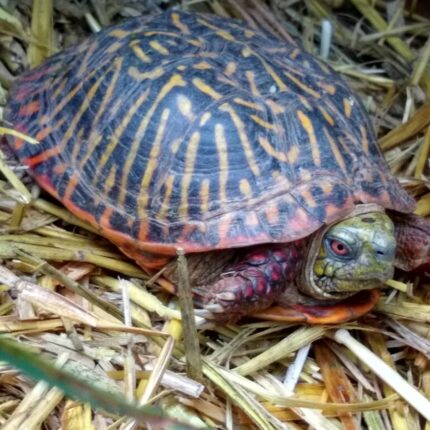
The Eastern Box Turtle (Terrapene carolina carolina) is a terrestrial turtle known for its domed shell and intricate yellow or orange markings against a dark brown or black background. Each turtle has a unique pattern, making this species especially distinctive.
Native to the eastern United States, the Eastern Box Turtle inhabits forests, woodland edges, and moist areas with plenty of ground cover. It needs a secure habitat with suitable humidity, shelter, and room to explore.
Eastern Box Turtle Highlights
- Common Name: Eastern Box Turtle
- Scientific Name: Terrapene carolina carolina
- Type: Terrestrial box turtle
- Native Range: Eastern United States
- Appearance: High-domed shell with yellow or orange markings
- Distinctive Feature: Hinged lower shell that helps the turtle close its shell for protection
- Habitat Needs: Spacious enclosure, moist substrate, hiding places, and suitable temperature gradients
Care and Habitat
Provide a secure enclosure with plenty of floor space, moisture-retaining substrate, leaf litter, and hiding places. Maintain appropriate humidity and temperatures while ensuring good ventilation. Include shaded areas and access to shallow fresh water.
Offer a varied diet suited to box turtles, with an appropriate balance of animal-based foods and plant matter. Monitor hydration, appetite, activity, and shell condition regularly.
Explore the Eastern Box Turtle
Eastern Box Turtles need specialized care and a long-term commitment. Their populations face conservation pressures, and regulations may restrict collection, sale, or transport. Confirm the turtle’s identity, legal origin, and required documentation before purchasing.
Contact Verdant Reptiles to enquire about current availability, pricing, and details of the individual turtle.
| Age/Size | cb Hatchlings, cb Well started baby, cb yearling, cb Young Adult |
|---|